
PDF
656.66 KB
This file may not be suitable for users of assistive technology.Request a different format.
Research: How people find and use educational resources in Wales
A new piece of research jointly commissioned by Adnodd and Welsh Government explores how practitioners, parents and carers across Wales find, use, adapt and share educational resources.
Read details
- First Published:
- Last Updated:
Documents
-
 PDF
User Journey and Experience Research for Adnodd
PDF
User Journey and Experience Research for Adnodd
The research, carried out by Miller Research between December 2024 and March 2025, offers valuable insights that will help shape the future of bilingual resources that support the Curriculum for Wales.
Understanding real-life experiences
The research aims to understand the challenges and behaviours involved in accessing resources particularly in the context of the Curriculum for Wales. It looked at both Welsh- and English-medium settings and drew on a mix of surveys, focus groups, and usability testing.
Practitioners, parents and carers were asked about where they look for resources, how they adapt them, and what gets in the way of using high-quality materials effectively.
What the research found
Here are some of the key findings from the research:
- Adaptation is the norm: Most practitioners rarely use resources exactly as they are. Instead, they regularly adapt materials to suit their learners’ needs, translate content into Welsh, or adjust for different ability levels.
- Time and access are key barriers: Many practitioners spend personal time searching for and adapting resources. Gaps in Welsh-medium content and the complexity of navigating multiple platforms were major concerns.
- Parents need trusted, easy-to-use content: Parents and carers value resources that are clearly linked to what’s being taught in school and that are simple to use, especially if they don’t speak Welsh.
- Hwb is valued, but underused: While seen as a trusted source for official information, Hwb isn’t often used for everyday resource discovery. Users want it to be more dynamic, searchable and personalised.
What the research recommends
The research points to a number of ways platforms like Hwb and resource comissioners like Adnodd can better meet users’ needs. These include:
- Ensuring all resources are bilingual and easy to adapt as standard.
- Improving search tools and how resources are organised.
- Support peer sharing and collaboration opportunities.
- Provide clearer support for parents, particularly in Welsh-medium contexts.
What’s next
Adnodd is already using the findings of the report to steer its strategy and inform the future development of Hwb . We will continue to engage with stakeholders and use the report to ensure all our work is evidence led.
By listening to the people who use resources every day, we’re working to ensure everyone in Wales—practitioners, learners and their families and communities—can access the high-quality, bilingual support they need.
You can read the summary research report here. Please get in touch with Adnodd to request a copy of the full report.
Meet the seven archetype characters
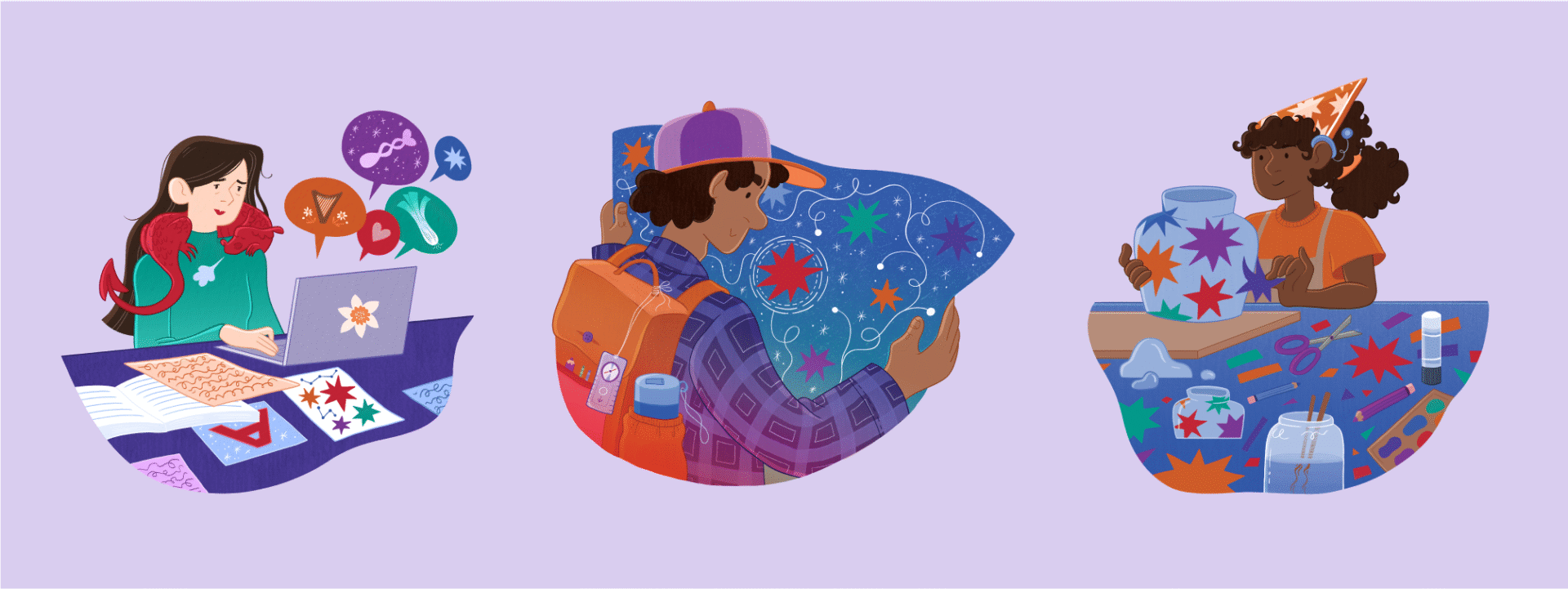
The research also identifies seven characters based on real life experiences of how educators, parents and carers in Wales interact with educational resources. Click the button below to learn more and meet the seven archetype characters.
Learn more