
Blog: Turning research insight into purposeful outcomes
Adnodd wants to create a digital resource experience that genuinely reflects what practitioners and learners need. To achieve this, we are using a set of strategic design tools that help turn research insights into a clear and purposeful experience for the education community in Wales.
Designing an improved user experience
One of the strategic design tools we use is an Ideal User Experience Map. This storyboard-style visual shows, at a high level, what “good” looks like across the end-to-end journey. It focuses on the future and helps define the experience we want to create, rather than limiting us to current systems or processes.

Download the full map here
I’ve used this approach throughout my career because it captures what people are doing, thinking and feeling at each stage. It helps teams step back and see the full journey from the user’s perspective, creating a shared vision of the desired experience. This becomes a north star for decision-making, making it easier to identify gaps, friction points, and opportunities to test, refine and prioritise new ideas.
Using the insight you shared with us through research carried out in 2025, we have created an ideal user experience map that reflects what good looks like for practitioners. It brings together the seven archetype characters from the original research and shows how their needs are met across five steps in their journey.

The five steps of the user journey
Each step in this ideal user journey will look and feel different depending on practitioner and learner needs. By having a clear step-by-step flow, we can work with colleagues at Welsh Government to start developing an improved digital platform that you told us you need.
- Discover resources
This step helps you identify and define your needs. It clarifies learning objectives so you can choose the most effective resources. - Get resources
This step supports you to search for and explore resources. It provides intuitive tools and clear groupings so you can quickly find trusted and relevant materials. - Use resources
This step focuses on evaluating and adapting resources. By offering flexible and accessible options, we can help you tailor materials for different contexts, learner needs and curriculum expectations. - Engage
This step helps you apply what you have chosen and use resources with learners. It supports practical use in classrooms and at home and encourages meaningful engagement. - Grow
This step enables you to reflect, store and share what has worked well. It encourages structured reflection and collaborative sharing, which strengthens collective knowledge building and continuous improvement.
From ideal user experience maps to curriculum storyboards
In 2025 I attended a Curriculum for Wales training session, and I was excited to see how the Welsh Government is encouraging the use of curriculum storyboards as a practical design tool for schools.
Storyboarding helps practitioners design coherent, purposeful learning experiences that align with the four purposes of the Curriculum for Wales while keeping a strong focus on learner experience and progression.
As shown in the Hwb case study video https://youtu.be/l5EjcMcAN3I, a Curriculum for Wales storyboard is structured across three clear sections. The top section uses images to show what is happening at each moment in the learning journey. The second section asks the learner facing question “Why am I learning this?” and the final section gives practitioners space to reflect on the learner experience, including engagement, challenge and progression.
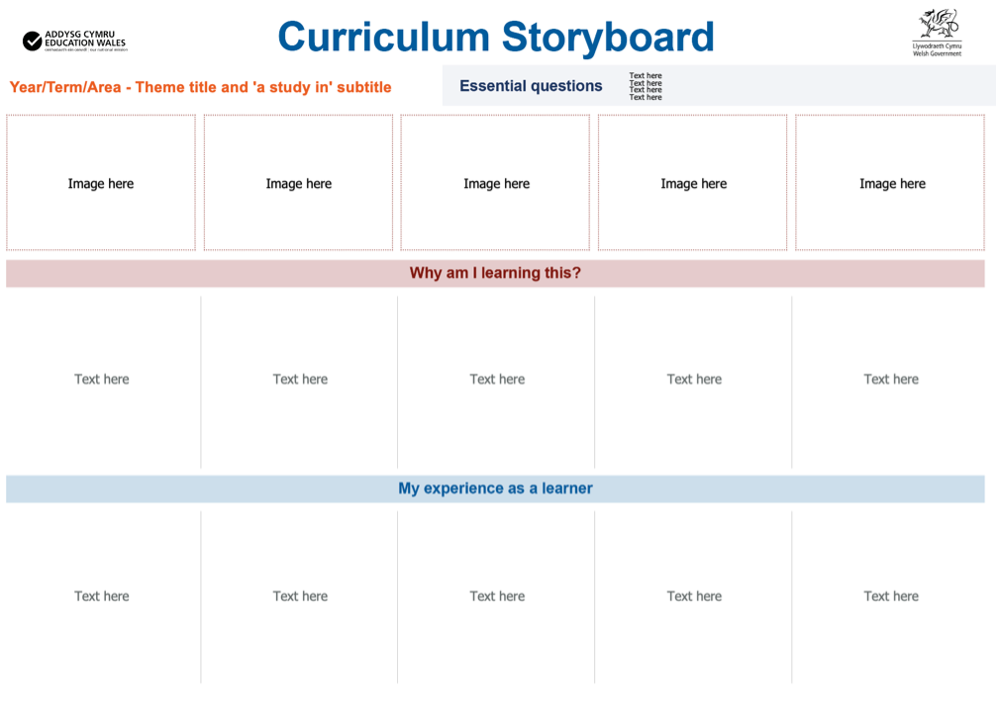
What I find particularly powerful is the outcome-based approach. Rather than starting with activities, it begins with the outcomes the practitioner wants to achieve and works backwards to design learning that gets there. In many ways, this mirrors experience mapping. Both provide a holistic, visual way to explore journeys, identify challenges, test ideas and adjust before anything is delivered in practice. Experience maps and storyboards also create space for intentional design, purposeful conversations and more meaningful learning experiences.
Using Super Mario as a metaphor
I loved Nintendo’s Super Mario when I was growing up. The character Mario 1.0 is a character capable of completing the game, but when he finds a fire flower, he becomes Mario 2.0 who is faster, more confident, and better equipped.
Our ambition is to power up practitioners, just like Mario 2.0. By equipping you with new capabilities we want to give you superpowers. We are working with Welsh Government to act as the fire flower that supports you to grow new capabilities and overcome classroom challenges with ease.
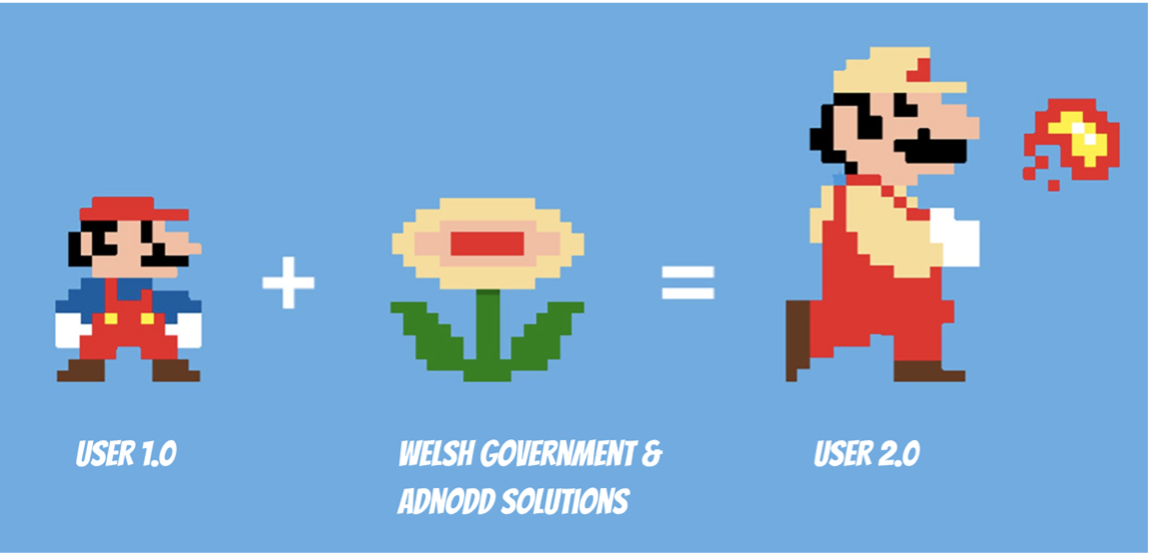
This means moving from just publishing resources to enabling meaningful learning. By helping you access, adapt and apply high quality materials, we hope to reduce complexity and support better decisions that lead to stronger learning outcomes.
If you’re interested in taking part in future research with Adnodd, or hearing more about our work, sign up to one of our newsletters below.
Written by Kirk Tierney, Digital and Experience Manager.
Join the community